



Endothelin Receptor
Endothelin receptors are G protein-coupled receptors (GPCRs) of the β-group of rhodopsin receptors that bind to endothelin ligands, which are 21 amino acid long peptides derived from longer prepro-endothelin precursors. There are at least four types known, ETA, ETB (ETB1, ETB2) and ETC. The ETA receptor is characterized by having high affinity and selectivity for ET-1 and ET-2 compared to ET-3, whereas the ETB receptor has equivalent high affinity for all three endothelin isopeptides.
Endothelins are synthesized in several tissues, including the vascular endothelium (ET-1 exclusively) and smooth muscle cells. Released endothelin binds to the endothelin receptors ETA and ETB, the ETA receptors on vascular smooth muscle cells mediating vasoconstriction, and the ETB receptors on the endothelium linked to nitric oxide (NO) and prostacyclin release.
Endothelin Receptor Isoform Specific Products
All Product Categories
-
Endothelin Receptor Inhibitors
(18)
View all products
-
Endothelin Receptor Agonists
(14)
View all products
-
Endothelin Receptor Antagonists
(94)
View all products
-
Endothelin Receptor Activators
(2)
View all products
-
Endothelin Receptor Modulator
(1)
View all products
-
Endothelin Receptor Control
(1)
View all products
-
Endothelin Receptor Ligands
(3)
View all products
-
Endothelin Receptor Proteins
(7)
View all products
-
Endothelin Receptor Type A (EDNRA) Proteins
(3)
View all products
-
Endothelin R Type B (EDNRB) Proteins
(4)
View all products
-
Endothelin Receptor Related Products (152)
Related Products (152)

-
Recombinant Proteins (7)
-
Antibodies (1)
-
Endothelin Receptor Isoform Comparison
-
Clazosentan
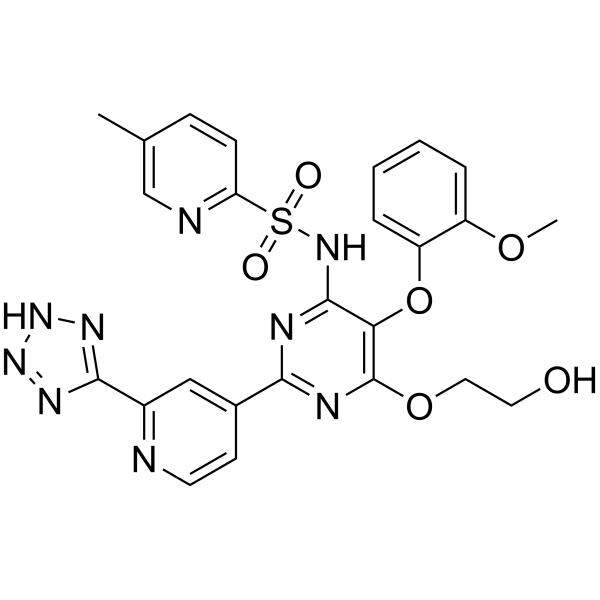 0 ImagesSynonyms: Ro 61-1790; VML 588; AXV-034343Clazosentan (Ro 61-1790) is a selective endothelin A (ETA) receptor antagonist. Clazosentan inhibits ET-1-mediated vasoconstriction. Clazosentan prevents cerebral vasospasm, vasospasm-related cerebral infarction.
-
Sulfisoxazole
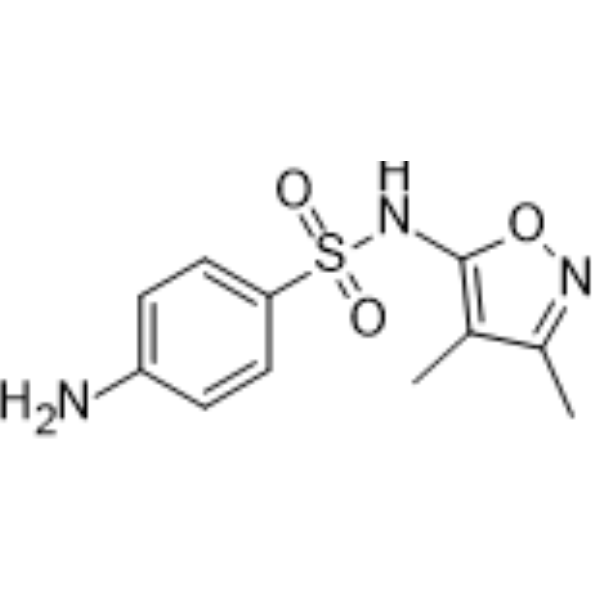 0 ImagesSulfisoxazole (Sulfafurazole) is an orally active endothelin receptor antagonist with IC50 values of 0.60 μM and 22 μM against endothelin receptor A and endothelin receptor B, respectively. Sulfisoxazole is a sulfonamide antibacterial agent with an oxazole substituent. Sulfisoxazole inhibits breast cancer exosome release by targeting endothelin receptor A.
-
Zibotentan
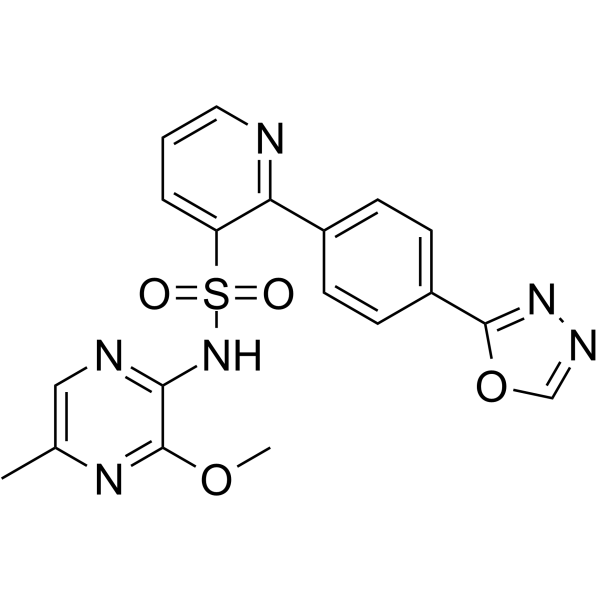 0 ImagesSynonyms: ZD4054Zibotentan (ZD4054) is a potent, selective and orally active endothelin A (ETA) receptor antagonist with a Ki of 13 nM. Zibotentan has no inhibitory effect on ETB. Zibotentan has anticancer effects and can be used for castration-resistant prostate cancer (CRPC) research.
-
IRL-1620
 0 ImagesIRL-1620 is a potent and selective endothelin receptor type B (ETB) agonist with a Ki of 16 pM.
-
C-Type Natriuretic Peptide (CNP) (1-22), human TFA
 0 ImagesC-Type Natriuretic Peptide (CNP) (1-22), human (TFA),a 1-22 fragment of CNP, is a natriuretic peptide receptor B (NPR-B) agonist. C-Type Natriuretic Peptide (CNP) (1-22), human (TFA) inhibits cAMP synthesis stimulated by the physiological agonists histamine and 5-HT or directly by Forskolin. CNP is a potent, endothelial-derived relaxant and growthinhibitory factor.
-
IRL-1620 TFA
 0 ImagesCat. No.: HY-16465APurity: 98.73%IRL-1620 (TFA) is a potent and selective endothelin receptor type B (ETB) agonist with a Ki of 16 pM.
-
Delphinidin 3-rutinoside chloride
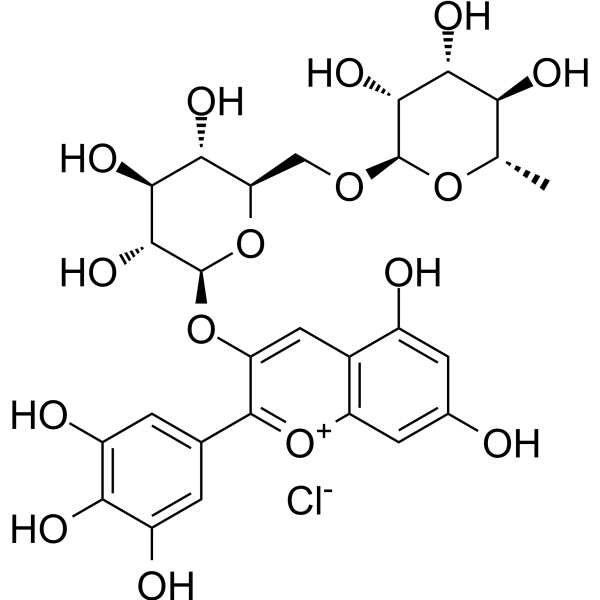 0 ImagesSynonyms: Delphinidin 3-O-rutinoside chlorideDelphinidin 3-rutinoside chloride is an anthocyanin component. Delphinidin 3-rutinoside chloride is isolable from the fruits of blackcurrant Ribes nigrum L. Delphinidin 3-rutinoside chloride activates the ETB receptor and stimulates the NO/cGMP pathway. Delphinidin 3-rutinoside chloride increases cyclic guanosine monophosphate production and reduces the phosphorylation level of Myosin regulatory light chain. Delphinidin 3-rutinoside chloride stimulates GLP-1 secretion. It significantly induces relaxation of bovine ciliary muscle strips contracted by ET-1 and inhibits ET-1-induced contraction of bovine ciliary muscle strips. Delphinidin 3-rutinoside chloride is applicable to research related to type 2 diabetes.
-
Atrial natriuretic peptide (3-28) (human)
 0 ImagesSynonyms: ANP (3-28) (human)Atrial natriuretic peptide (3-28) (human) (ANP (3-28) (human)) is a peptide hormone that is synthesized and secreted by the atrial myocardium. Atrial natriuretic peptide (3-28) (human) is involved in the regulation of blood pressure, fluid balance, and electrolyte homeostasis.
-
Xipamide
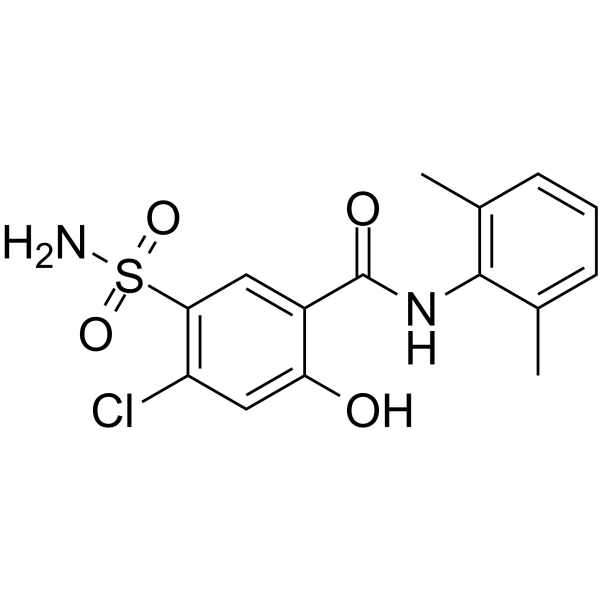 0 ImagesXipamide is an orally active carbonic anhydrase (CA) inhibitor and Na+/Cl--potassium transporter inhibitor with diuretic and antihypertensive effects. Xipamide reduces NaCl reabsorption by inhibiting the Cl-/NaCO3- anion exchanger, and increases calcium reabsorption while promoting potassium and magnesium excretion. Xipamide is mainly cleared via the renal pathway and causes a temporary decrease in glomerular filtration rate under specific conditions. Xipamide does not affect Ca2+ signaling induced by endothelin-1 and other factors, nor does it inhibit various ion cotransport or pump activities in red blood cells. Xipamide can be used in researches related to cardiovascular diseases, hypertension (especially with left ventricular hypertrophy), advanced renal failure, and liver cirrhosis with ascites.
-
Tezosentan
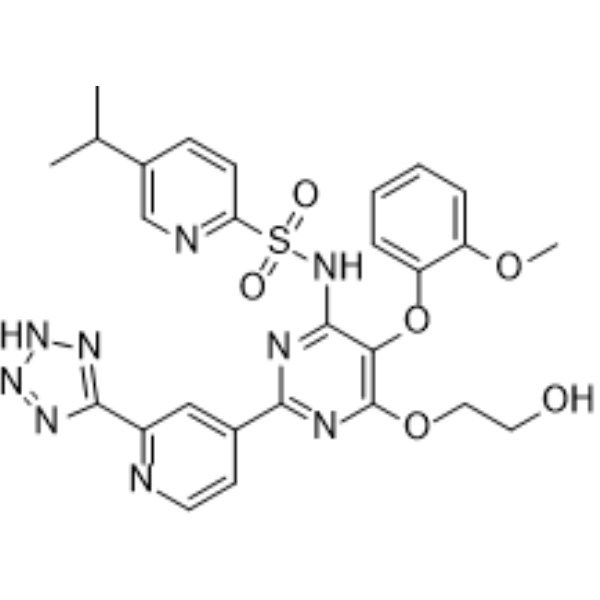 0 ImagesSynonyms: RO 610612Tezosentan (RO 610612) is an endothelin (ET) receptor antagonist, with pA2s of 9.5, 7.7 for ETA and ETB receptors, respectively.
-
IRL 2500
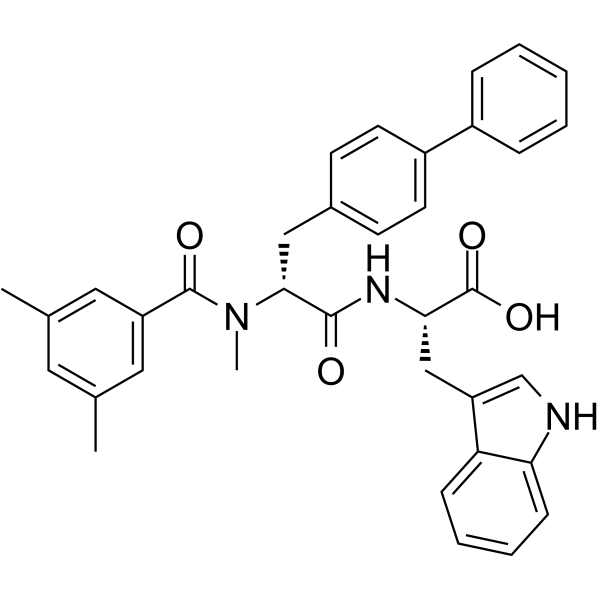 0 ImagesIRL 2500 is a potent Endothelin receptor antagonist. IRL 2500 shows IC50 values of 1.3 and 94 nM for ETB and ETA receptors, respectively. IRL 2500 inhibits ETB receptor-mediated blood pressure increase and renal vascular resistance in rats in vivo.
-
Endothelin-3, human, mouse, rabbit, rat
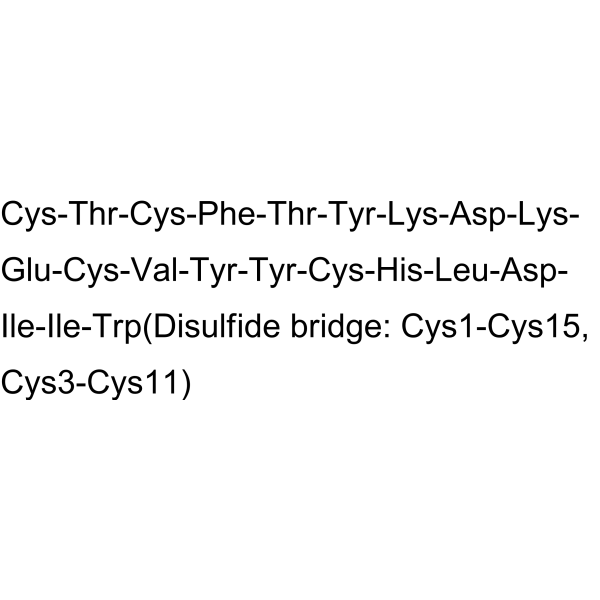 0 ImagesCat. No.: HY-P0204CAS No.: 117399-93-6Synonyms: Endothelin 3 (Rat,Human)Endothelin-3, human, mouse, rabbit, rat (Endothelin 3 (Rat,Human)) is an adhesion stimulant. Endothelin-3, human, mouse, rabbit, rat stimulates the adhesion of enteric neural crest cells to various ECM components. Endothelin-3, human, mouse, rabbit, rat plays an important role in the maintenance and self-renewal of intestinal progenitor cells, participates in the migration of enteric neural crest cells, and helps maintain a suitable environment for the colonization of enteric neural crest cells. Endothelin-3, human, mouse, rabbit, rat acts synergistically with the β1-integrin signaling pathway during enteric nervous system development. Endothelin-3, human, mouse, rabbit, rat can be used in studies related to distal aganglionosis.
-
Endothelin-2 (49-69), human TFA
 0 ImagesCat. No.: HY-P0207APurity: 99.21%Synonyms: Endothelin-2 (49-69) (human, canine) TFA; Human endothelin-2 TFAEndothelin-2 (49-69), human (TFA) (Endothelin-2 (49-69) (human, canine) (TFA)) is a 21-amino acid vasoactive peptide that binds to G-protein-linked transmembrane receptors, ET-RA and ET-RB.
-
A-192621
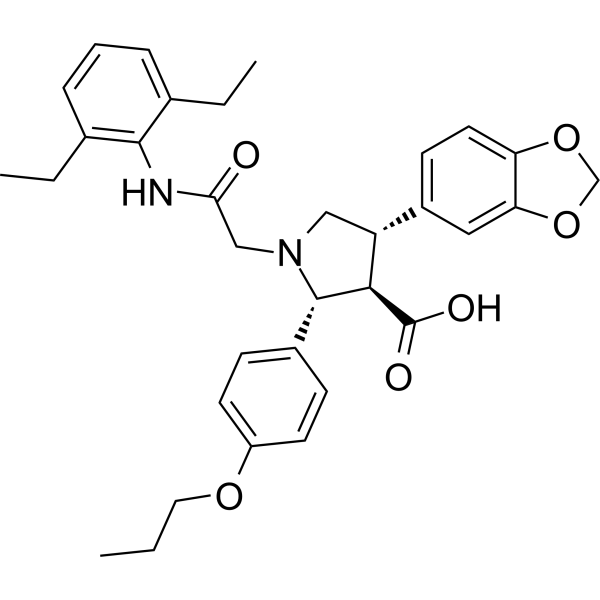 0 ImagesA-192621, a chemical probe, is a potent, nonpeptide, orally active and selective endothelin B (ETB) receptor antagonist with an IC50 of 4.5 nM and a Ki of 8.8 nM. The selectivity of A-192621 is 636-fold higher than ETA (IC50 of 4280 nM and Ki of 5600 nM). A-192621 promotes apoptosis in PASMCs. A-192621 alos causes elevation of arterial blood pressure and an elevation in the plasma ET-1 level.
-
Macitentan-d4
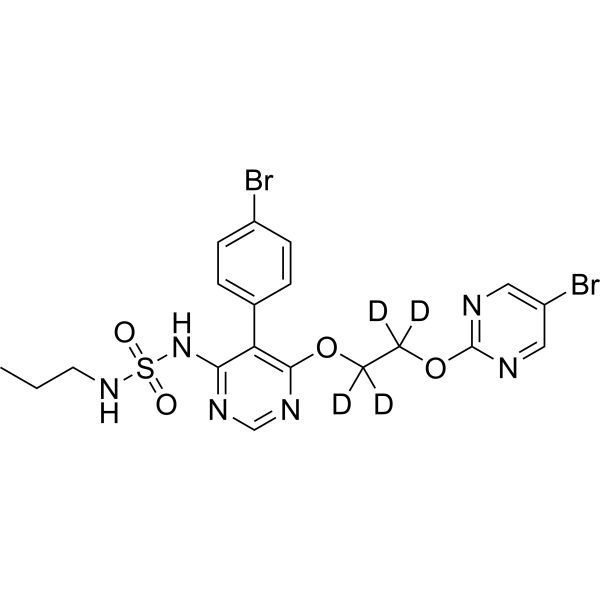 0 ImagesSynonyms: ACT-064992-d4Macitentan-d4 is a deuterium labeled Sulfamethoxazole. Macitentan is an orally active, non-peptide dual ETA and ETB (endothelin) receptor antagonist. Macitentan has the potential for idiopathic pulmonary fibrosis (IPF) and pulmonary arterial hypertension (PAH).
-
Aprocitentan-d4
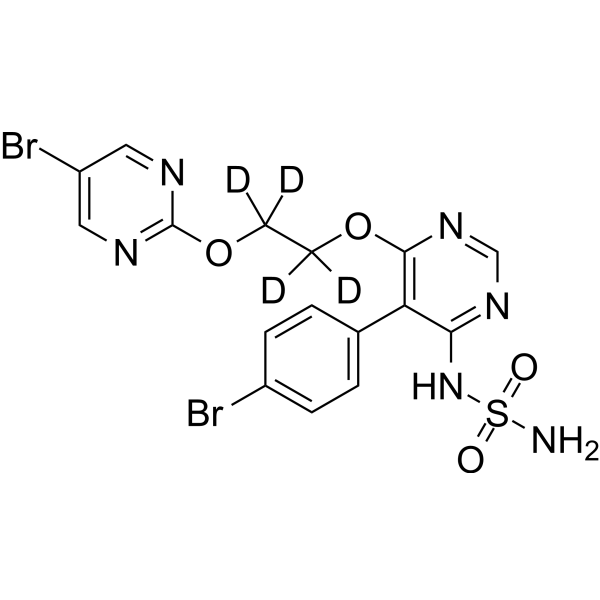 0 ImagesSynonyms: ACT-132577-d4Aprocitentan-d4 is a deuterium labeled Aprocitentan. Aprocitentan is a major and pharmacologically active metabolite of Macitentan. Aprocitentan is an orally active dual ETA/ETB antagonist with IC50s of 3.4 nM and 987 nM, and pA2 valus of 6.7 and 5.5, respectively. Aprocitentan is an antihypertensive agent.
-
Schisantherin D
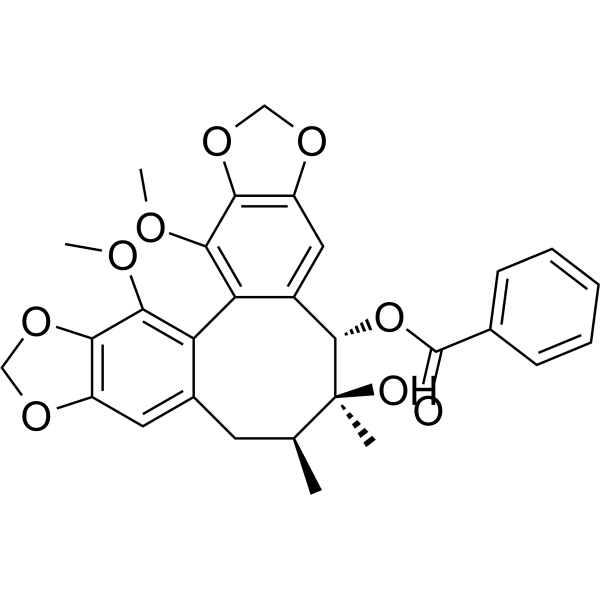 0 ImagesSchisantherin D is a lignan. Schisantherin D can be isolated from Kadsura interior. Schisantherin D downregulates the expression of ETBR and inhibits the secretion of ECM and ET-1. Schisantherin D alleviates EtOH + ET-1-induced hepatocyte cytotoxicity. Schisantherin D potently inhibits HIV replication in cells.
-
Darusentan
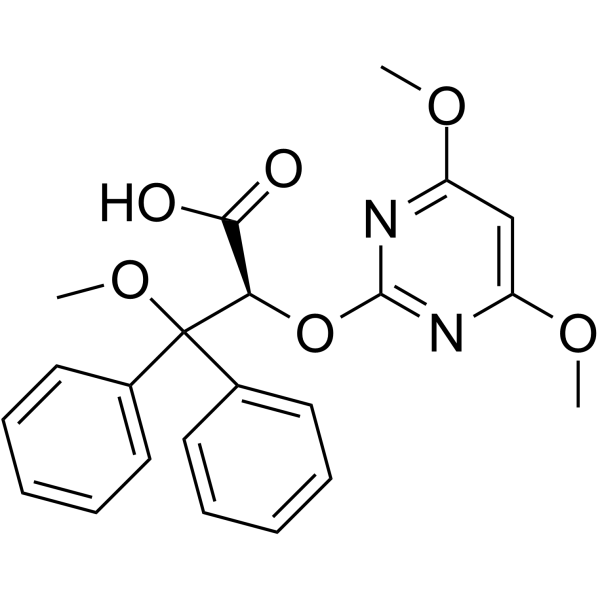 0 ImagesSynonyms: Lu-135252Darusentan (Lu-135252) is a selective endothelin receptor A (ET-A) receptor antagonist, which binds with a Ki of 1.4 nM to the ET-A receptor and a Ki of 184 nM to ET-B receptor, respectively with a 100-fold selectivity for ETA rather than ETB receptors. Darusentan competes for radiolabeled endothelin binding in rat aortic vascular smooth muscle cells (RAVSMs) membranes with single-site kinetics, exhibiting a Ki of 13 nM.
-
Atrial Natriuretic Peptide (ANP) (1-28), rat, mouse TFA
 0 ImagesCat. No.: HY-P1236APurity: 99.32%Synonyms: Atrial natriuretic factor (1-28) (rat, mouse) TFAAtrial Natriuretic Peptide (ANP) (1-28), rat, mouse (TFA) is a major circulating form of ANP in rats, potently inhibits Angiotensin II (Ang II)-stimulated endothelin-1 secretion in a concentration-dependent manner.
-
Patecibart
 0 ImagesCat. No.: HY-P990089CAS No.: 2642374-04-5Synonyms: Getagozumab; GMA-301Patecibart is a humanized immunoglobulin G4-kappa, anti-EDNRA monoclonal antibody. Patecibart is an endothelin receptor antagonist.




